
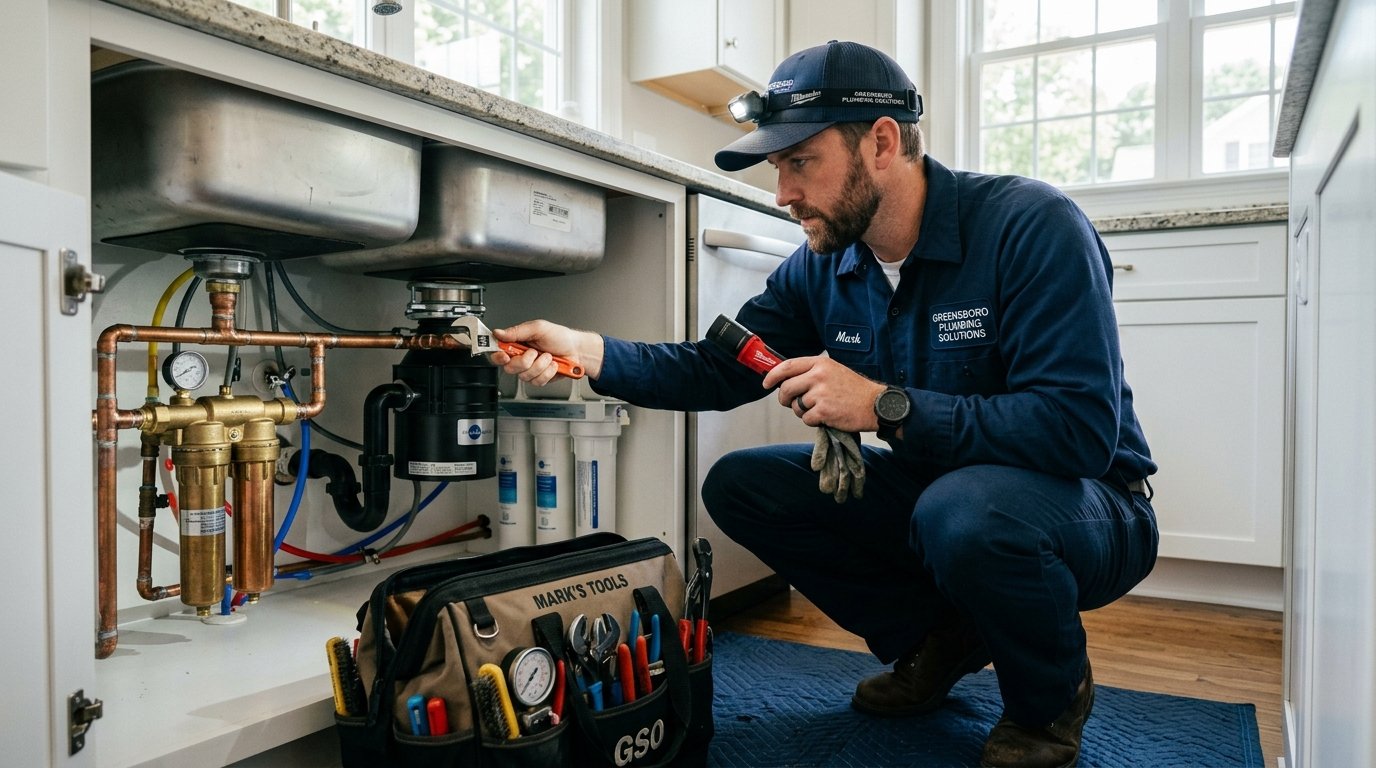
Comprehensive Whole-House Water Filtration Solutions in Greensboro, North Carolina
When residential or commercial plumbing infrastructure fails, property owners require fast, precise, and durable professional intervention. Our dedicated team at Greensboro Plumbing Expert delivers full-scale whole-house water filtration engineered to address root causes, restore optimal pressure and drainage hydraulics, and protect your property from costly water damage. With deep local experience across Greensboro and Guilford County, we treat every plumbing call with the highest technical diligence and care.
Advanced multi-stage water filtration systems for clean, chlorine-free drinking water. Whether you are managing an unexpected emergency or planning long-term plumbing improvements, our certified technicians arrive equipped with specialized diagnostic instruments to inspect, isolate, and resolve the issue correctly on the first visit.
Why Early Intervention Matters
Ignoring minor plumbing symptoms such as slow drainage, faint odors, or pressure drops often allows localized wear to spread into major structural pipe failures. Timely professional evaluation minimizes restoration expenses and safeguards indoor air quality.
Common Symptoms Requiring Professional Whole-House Water Filtration
Plumbing systems communicate distress through clear physical signs long before catastrophic failure occurs. If you observe any of the following symptoms in your home or commercial building, scheduling a diagnostic inspection is strongly recommended:
- Strong chlorine or chemical taste and smell in tap water: Common indicator signaling immediate diagnostic attention.
- Cloudy tap water or visible rust and sediment flecks in toilet tanks: Common indicator signaling immediate diagnostic attention.
- Skin dryness or irritation after showering: Common indicator signaling immediate diagnostic attention.
- Blue-green staining on porcelain from acidic water: Common indicator signaling immediate diagnostic attention.
Each of these indicators points to mechanical wear, pressure imbalance, or environmental stress within your supply or drainage lines. Rather than masking these problems with temporary chemical fixes or superficial adjustments, our master plumbers evaluate the entire hydraulic circuit to ensure long-term stability.
Underlying Causes & Piedmont Environmental Influences
Plumbing systems in Greensboro and the greater Piedmont Triad face unique regional challenges that accelerate equipment fatigue. Understanding these factors is essential for choosing permanent repair solutions rather than short-term patches:
- Municipal chlorine/chloramine disinfection byproducts: Underlying physical or environmental failure point observed in regional plumbing systems.
- Sediment and rust sloughed off aging municipal water mains: Underlying physical or environmental failure point observed in regional plumbing systems.
- Low pH acidic groundwater in rural Piedmont wells: Underlying physical or environmental failure point observed in regional plumbing systems.
Specifically, the Piedmont region is known for its heavy red clay soil. This dense soil expands significantly when saturated during heavy North Carolina spring rainstorms and contracts during summer droughts. This ongoing ground movement exerts intense lateral pressure on buried sanitary sewer lines, water service mains, and foundation penetrations, leading to offset joints, cracked clay laterals, and fractured supply lines.
Furthermore, Piedmont winter freeze cycles repeatedly drop temperatures below freezing, causing water inside uninsulated crawlspace pipes and exterior hose bibbs to expand and burst. In addition, moderate municipal water mineral hardness gradually coats internal water heater elements, valve cartridges, and pipe walls with calcium scale, diminishing heating efficiency and accelerating galvanic corrosion.
Professional Diagnostic Methodology & Equipment
Accurate diagnosis is the cornerstone of exceptional plumbing craftsmanship. At Greensboro Plumbing Expert, we never guess when evaluating concealed pipe systems. Our diagnostic workflow incorporates cutting-edge non-invasive technologies:
Comprehensive on-site water quality analysis testing for hardness, pH, total dissolved solids (TDS), and chlorine levels.
Our technicians utilize commercial-grade tools including: Digital TDS meters, Hach chlorine test kits, Heavy-duty 20-inch Big Blue filter housings. By pairing high-definition fiber optic video inspection with precision electronic line transmitters, we locate the exact depth and coordinates of subterranean defects. This precision eliminates unnecessary excavation of manicured landscaping or destructive tearing into interior drywall, saving homeowners significant time and money.
Step-by-Step Restoration Process
Every service call follows our strict engineering protocol to ensure complete safety, structural protection, and full code compliance:
- 1. Water profile testing and system capacity sizing
- 2. Installation of multi-stage sediment and activated carbon filter manifolds
- 3. Placement of bypass valve cluster for effortless filter cartridge changes
- 4. Post-installation water purity verification
Throughout the restoration, our technicians protect your flooring with heavy-duty drop cloths and clean shoe covers. After mechanical repairs are finished, we execute full hydrostatic pressure testing and thorough flow verification, ensuring that all joints, seals, and relief valves operate within optimal manufacturer specifications before we consider the job complete.
Repair vs. Replacement: Making the Right Long-Term Decision
Homeowners often ask whether repairing an existing component or investing in a full replacement is the most cost-effective path forward. We provide objective, pressure-free technical assessments based on verifiable criteria:
- Component Age & Useful Lifespan: If your plumbing fixture, water heater, or sewer line has exceeded 75% of its expected operational life, ongoing spot repairs often cost more over a two-year horizon than a modern, high-efficiency replacement.
- Frequency of Past Failures: A single isolated leak on a sound copper pipe warrants a localized repair. Conversely, recurring pinholes throughout a galvanized supply branch indicate systemic interior wall thinning, making whole-house repiping the only permanent solution.
- Energy & Water Efficiency: Modern replacement fixtures and appliances—such as WaterSense certified 1.28 GPF toilets and condensing tankless water heaters—drastically reduce monthly utility bills while providing enhanced daily performance.
- Safety & Code Compliance: Any component exhibiting structural wall fatigue, uncontained gas leaks, or persistent sewage backflow requires immediate replacement to protect household health and meet current North Carolina safety codes.
North Carolina Plumbing Code & Safety Standards
NSF/ANSI 42, 53, and 58 certified systems installed per NC Plumbing Code potable water standards. All work performed by Greensboro Plumbing Expert adheres strictly to the North Carolina State Building Code: Plumbing Chapter and relevant local Guilford County municipal ordinances. From proper sanitary drain slope (minimum 1/4-inch per foot) to code-mandated thermal expansion tanks on closed municipal water supplies, we ensure that every installation satisfies both insurance guidelines and municipal safety standards.
Transparent Pricing & Estimate Transparency
We believe that trust begins with transparent pricing. Unlike companies that provide vague verbal ballpark estimates, Greensboro Plumbing Expert delivers clear, written, upfront estimates before any physical labor begins. Factors that influence your project investment include:
- Diagnostic Complexity: Specialized electronic leak correlation or long-distance main sewer camera inspections.
- Commercial-Grade Materials: High-purity Type L copper, Uponor PEX-a expansion systems, Schedule 40 PVC, or commercial brass shutoff valves.
- Physical Accessibility: Work situated in open basement utility rooms versus confined crawlspaces or beneath concrete slab foundations.
- Permitting & Official Inspections: City of Greensboro or Guilford County permit acquisition fees and inspection scheduling for major water heater or sewer installations.
What Homeowners Can Expect from Our Team
From the moment you contact our Greensboro office to the final project inspection, you will experience respectful, reliable, and communicative service:
- Prompt Scheduling & Communication: Clear arrival windows with courtesy calls when our technician is en route.
- Clean Job Site Etiquette: Floor protection, clean uniforms, shoe covers, and meticulous post-repair cleanup.
- Itemized Written Estimates: Honest pricing with zero hidden fees or surprise add-ons.
- Comprehensive Final Walkthrough: Our technician demonstrates the completed repair, explains maintenance best practices, and answers all your questions.
Frequently Asked Questions
Does Greensboro municipal water require a water softener or filtration system?
While Greensboro municipal water meets federal drinking standards, it contains chlorine/chloramine disinfection agents and dissolved mineral content that causes limescale deposits on fixtures, dries out skin and hair, and imparts an unpleasant municipal chemical odor. A whole-house carbon filtration and conditioning system removes chlorine, sediment, and heavy minerals, protecting your appliances and providing pure drinking water at every tap.
How do water softeners protect water heaters and household plumbing?
Water softeners remove calcium and magnesium ions via ion-exchange resin. By eliminating these minerals before water enters your plumbing lines, water softeners prevent rock-hard limescale from crusting onto water heater heating elements, boiler tubes, and shower valves, extending appliance lifespan by up to 30% and maximizing energy efficiency.
What should I do immediately during a major plumbing emergency?
First, shut off your home main water valve immediately to stop the flow of water and prevent catastrophic structural flooding. For localized fixture leaks (such as a running toilet or dripping faucet), use the individual shutoff valve located beneath the fixture. Next, switch off power at your electrical panel to any water heating appliances or flooded areas to prevent electrical hazard. Then call Greensboro Plumbing Expert at +1 (336) 796-1510 for priority emergency dispatch.
How are plumbing service estimates calculated?
Plumbing estimates are determined by clear, transparent factors: physical inspection and diagnosis, required commercial-grade replacement parts, the labor complexity of the repair, accessibility of the affected piping (such as crawlspace, wall cavity, or underground sewer depth), and necessary municipal code compliance requirements. We provide clear, itemized upfront pricing before starting any repair work so you always know exactly what to expect.
Related Plumbing Services in Greensboro
Emergency Plumbing
Rapid response for burst pipes, uncontainable water leaks, and urgent main line sewer backups.
View Service →Drain Cleaning & Jetting
Clearing tough clogs, grease buildup, and invasive tree roots with commercial cable snakes and hydro jetting.
View Service →Water Heater Repair
Precision diagnostics and repairs for gas, electric, and tankless water heaters in Greensboro.
View Service →Request Plumbing Service or Estimate
Fill out the form below for prompt dispatch or a transparent service consultation in Greensboro. For urgent emergencies, please call +1 (336) 796-1510 directly.